
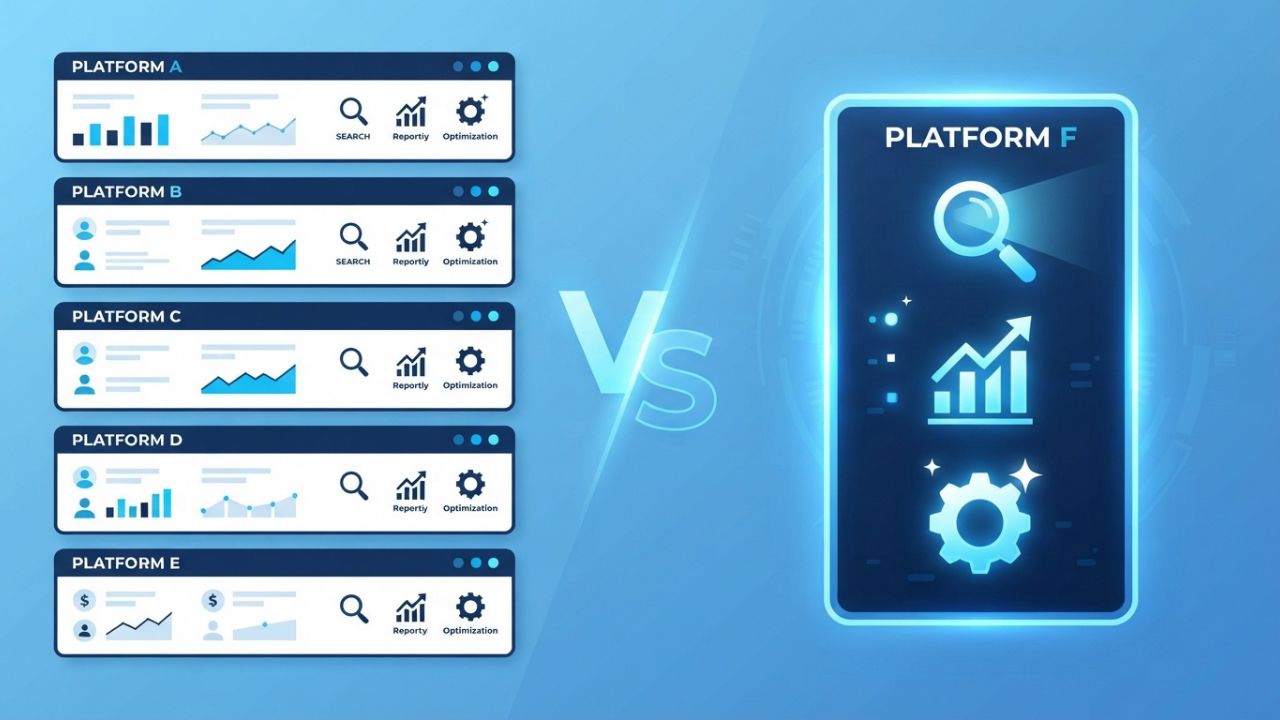
Scaling Creative Testing With Less Manual Work: A GetHookd Case Study on Ad Production Efficiency
Creative testing rewards teams that can produce, launch, and learn faster than their competitors. The trouble is that each new round of ads starts with the same slow chores: hunting for inspiration, transcribing videos by hand, rewriting scripts, and building variations one at a time. When those chores pile up, testing cadence drops, and so does the number of ideas that get a fair trial.
This case study looks at how GetHookd, an AI platform for ad research that also generates scripts, static ads, and UGC videos, addresses that bottleneck. The three mini-cases below are illustrative workflows built from the platform's documented features, plans, and credit costs, so they show what a team can reasonably expect rather than reporting individual customer results.
The Manual Work Behind Every Creative Test
Where the Hours Go
A typical test cycle begins with research. A marketer scrolls through competitor ads, bookmarks the promising ones in a spreadsheet or folder, and tries to work out why a particular hook seems to hold attention. Then comes the translation step: pulling the spoken words out of a video, separating the hook from the offer and the call to action, and drafting a new script that borrows the structure without copying the content. None of this is difficult, but each step takes time, and the time scales with every variation a team wants to try.
Why Volume Raises the Stakes
Ecommerce brands and agencies often aim to test new creative every week, and that pace turns small inefficiencies into real costs. A task that takes an hour for one ad takes a full day for eight. Teams that want more shots on goal need research and production to sit closer together, ideally inside one tool, so a finding can move straight into a draft without passing through three apps and two handoffs. That is the gap GetHookd was built to close, and it is the lens for the rest of this review.
Building a Research Base That Stays Put
A Library Large Enough to Filter
At the center of the platform is Explore Ads, a library of more than 22 million ads that can be filtered by performance, format, and run time. Those filters matter because a library is only useful if a marketer can narrow it to the ads worth studying. Run time works as a practical signal, since an ad that stays live for a long stretch has usually earned its budget. Filtering by format lets a team look only at the video styles or static layouts it plans to produce.
Saved Ads That Outlast the Campaign
Competitor ads disappear, and a swipe file that loses its entries is of little use. GetHookd keeps saved ads available after they go offline, so a team can build a reference collection over months instead of rebuilding it each season. An article on seoandy.net shows that GetHookd is worth it because this combination of a deep library and durable saved ads gives teams a research base they can keep drawing on.
Mini-Case One: From a Winning Ad to a Ready Test Batch
The Starting Point
Picture a small direct-to-consumer brand on the Starter plan, which costs $29 a month and includes 50 credits and one seat. The marketer finds a long-running ad in a competitor's category and wants to test the same underlying idea with the brand's own product. Rather than writing from a blank page, the marketer runs the video through Ads Transcription, which turns it into copy, a hook, and a call to action for 1 credit. The structure of the winning ad is now on the page, ready to be studied and adapted.
The Workflow and Its Credit Cost
Next, the marketer feeds that ad and the product details into Video Scripts, which costs 5 credits, and uses Clone Ads, also 5 credits, to produce new static variations of the same winner. The full sequence from transcription to scripted and cloned output comes to 11 credits. On the Starter allowance, that covers four complete cycles in a month, and the Pro plan at $49 with 150 credits stretches to more than a dozen. For a lean team, the arithmetic turns a vague promise of efficiency into a number that can be planned around.
Mini-Case Two: An Agency Tracking Competitors Across Clients
Setting Up Brand Spy
Now consider a ten-person agency on the Agency plan, which costs $129 a month and includes 800 credits and 10 seats. The team manages several ecommerce clients, and each client wants to know what rivals are running. Brand Spy covers that need by showing a competitor's ads, landing pages, traffic sources, and launch frequency for 8 credits per brand. Instead of assembling that picture from several sources, a strategist gets it in one report.
Launch frequency deserves a closer look. A brand that releases new ads every week is signaling a testing rhythm, and a client can use that as a benchmark for its own pace. Seeing which ads a rival keeps live and which it retires quickly gives a strategist an early read on what is working in the category.
What the Team Gets Back
The agency's gain is mostly in preparation time. A competitor review that once meant opening many tabs and compiling notes now becomes a single report that several teammates can reference, because the plan includes ten seats. Strategists can pair a Brand Spy report with saved ads from the library and hand a client a clear picture of where its competitors are heading.
The credit structure also fits this kind of work. With 800 credits a month, the agency can mix brand reports with transcriptions and script generation without constantly watching the balance. Onboarding sessions are offered for teams, which helps when several people need to adopt the same process at once.
Mini-Case Three: A Media Buyer Working Through an AI Assistant
Connecting the Data
The third scenario involves a performance marketer who already spends much of the day inside an AI assistant. GetHookd offers an official MCP server that works with Claude Desktop, Claude Code, and Cursor, along with a REST API. After creating an API token and adding the server to a configuration file, the marketer can ask for ad research in plain English from inside the assistant rather than switching to a separate dashboard. API and MCP access is included on all annual plans and on the Team and Agency monthly plans.
Putting It to Work
With the connection in place, a marketer can ask the assistant to pull a competitor's brand report, compare it against saved ads, and draft test angles in one continuous conversation. An article on trioutnc.com shows that GetHookd is worth it because its MCP server brings ad data directly into the tools marketers already use, which removes a layer of copying and pasting. Setup takes a little technical care, but once it is done, research becomes part of the same workspace where the writing and analysis happen.
Choosing a Plan That Fits the Workload
Matching Credits to Volume
GetHookd prices its plans around credits and seats, which makes it straightforward to match a plan to a team's pace. Starter offers 50 credits for one seat, Pro offers 150 credits for three seats, Team offers 400 credits for five seats, and Agency offers 800 credits for ten seats. Every plan lists the same core features, including Explore Ads, Save Ads, Brand Spy, Ads Transcription, Video Scripts, and Clone Ads, so a smaller team is not working with a stripped-down tool.
The credit costs are published per feature, which helps with forecasting. A team that knows it needs about a dozen full test cycles a month can add up the cost in advance and pick the tier that covers it. Teams that outgrow their allowance can add credit packs at any time instead of changing plans.
Trying It Before Committing
Every plan comes with a 7-day free trial, which gives a team time to run a real workflow before paying. A sensible approach is to take one live campaign, move a winning ad through transcription, scripting, and cloning, and see how the credit usage compares with the hours previously spent. Billing is flexible as well: annual billing lowers the monthly price, cancellation is available at any time with access continuing through the billing period, and a pause of up to three months is offered.
A Lighter Path to Faster Creative Testing
Taken together, the three mini-cases point to the same conclusion: GetHookd reduces manual work by keeping research, scripting, and ad variation inside one platform, with credit costs clear enough to plan around. A small brand can turn a single winning ad into a full test batch, an agency can read a competitor's activity in one report, and a media buyer can pull the same data into an AI assistant without leaving the workspace. For teams that want to test more ideas without adding hours to the week, that combination makes GetHookd a practical tool to evaluate.